
- Unit 14 Social Psychologymr Volkmar's Course Pages Pdf
- Unit 14 Social Psychologymr Volkmar's Course Pages Search
- Unit 14 Social Psychologymr Volkmar's Course Pages Page
- Unit 14 Social Psychologymr Volkmar's Course Pages Printable
Social Psychology
UNIT PREVIEW
Social psychology is the scientific study of how people think about, influence, and relate to one another. In thinking about others’ behavior and its possible causes, we tend to underestimate the influence of the situation, thus committing the fundamental attribution error. Attitudes affect behavior when external influences are minimal, especially when the attitude is stable, specific to the behavior, and easily recalled. Our actions can also modify our attitudes, especially when we feel responsible for those actions.
Research on social influence indicates that behavior is contagious. When we are unsure about our judgments, we are likely to adjust them toward the group standard. Sometimes, social influences are even strong enough to make people conform to falsehoods or capitulate to cruelty. The presence of others can arouse individuals, boosting their performance on easy tasks but hindering it on difficult ones. When people pool their efforts toward a group goal, individuals may free-ride on others’ efforts. Sometimes, group experiences arouse people and make them anonymous, and thus less self-aware and self-restrained. Within groups, discussions can enhance members’ prevailing attitudes and produce groupthink. A minority committed to a position can, however, influence a majority.
- FALL19 PSY1513 #010/V10. Module 2 - Chapter 2 Psychological Research. Skip To Content.
- Myers ap psychology unit 4 study guide Golden Education World Book Document ID 63813afd Golden Education World Book guide as a way to make the process of studying for.
June 10th, 2018 - high school youtube based psychology course based on college lectures from a course at biola edu keep in mind this course is from a perspective of christian someone who believes humans were created with purpose as opposed to beings just evolve by chanc'Valley Springs School District.
Prejudice can be both overt and subtle. As overt prejudice wanes, subtle prejudice lingers. Social barriers and biases are often unconscious. Prejudice arises from social inequalities, social divisions, and emotional scapegoating. Prejudice also has emotional and cognitive roots.
Aggression is a product of nature and nurture. In addition to genetic, neural, and biochemical influences, aversive events heighten people’s hostilities. Aggressive behavior is also learned through rewards and by observing role models and media violence.
Geographical proximity, physical attractiveness, and similarity of attitudes and interests influence our liking for one another. Passionate love is an aroused state we cognitively label as love. Companionate love often emerges as a relationship matures and is enhanced by equity and
self-disclosure.
Altruism is the unselfish regard for the welfare of others. The presence of others at an emergency can inhibit helping. The bystander effect is most apparent in situations where the presence of others inhibits one’s noticing an event, interpreting it as an emergency, or assuming responsibility for offering help. Many factors influence our willingness to help someone in distress, including cost-benefit analysis and social norms or expectations.
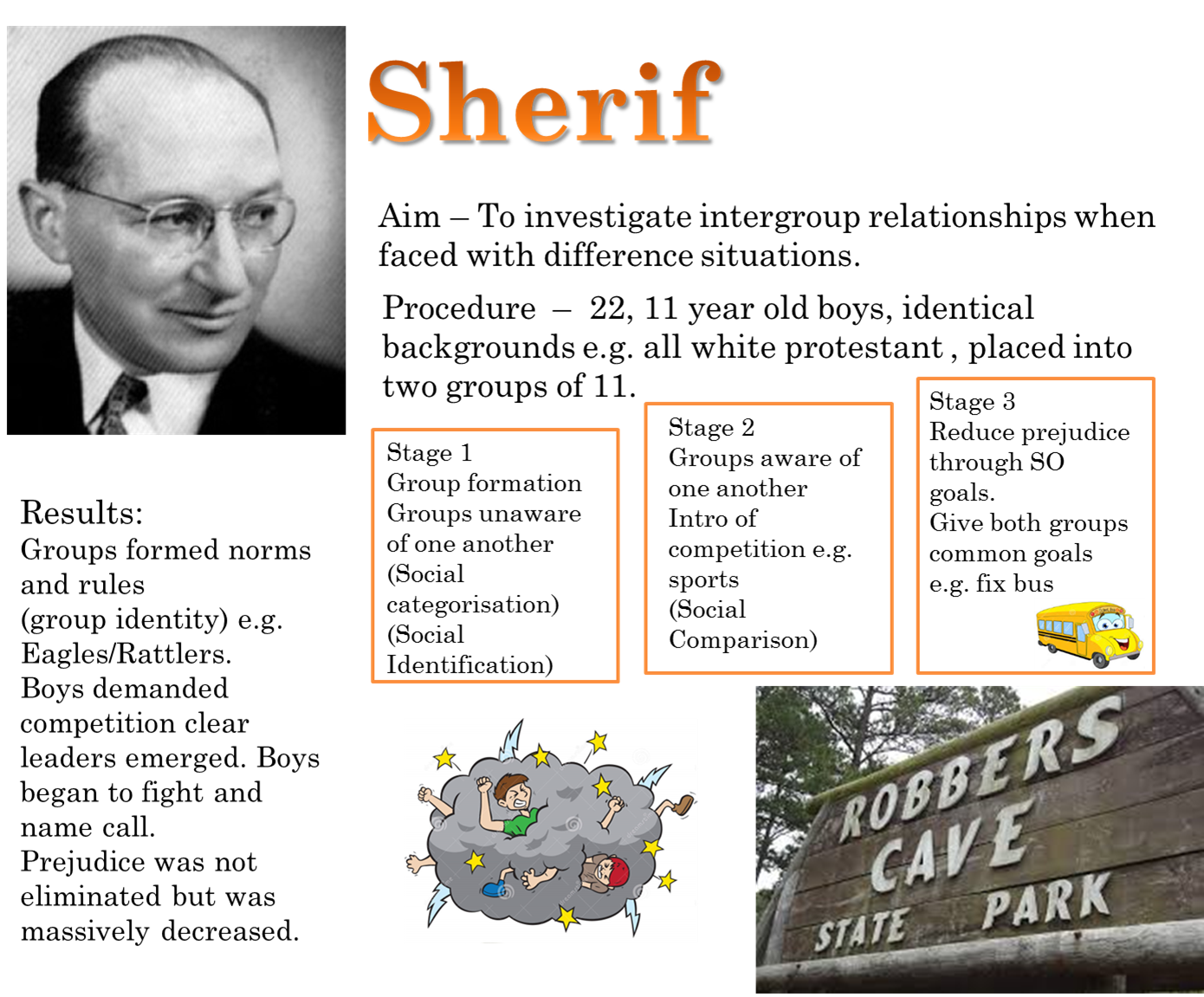
Conflicts are fueled by social traps and by enemies forming mirror-image perceptions of one another. Enemies become friends when they work toward superordinate goals, communicate clearly, and reciprocate conciliatory gestures.
Social Thinking
Social psychology scientifically studies how (1) we think about, (2) influence, and (3) relate to one another. Attribution theory states that we tend to give a causal explanation for someone’s behavior. We may explain people’s behavior in terms of internal dispositions or in terms of the external situation. For example, a teacher may explain a child’s hostility in terms of an aggressive personality or as a reaction to stress or abuse. The fundamental attribution error—our tendency to overestimate personality influences and to underestimate situational influences—can lead us to unwarranted conclusions about others’ personality traits. For example, we may blame the poor and the unemployed for their own misfortune.


Unit 14 Social Psychologymr Volkmar's Course Pages Pdf
Attitudes are feelings, often influenced by our beliefs, that predispose us to respond in a particular way to objects, people, and events. For example, we may feel dislike for a person because we believe he or she is mean, and, as a result, act unfriendly toward that person.
Attitudes often predict our behavior. Public opinion about the reality and dangers of global climate change can change with effects on both personal behaviors and public policies. Many campuses and corporations are now going green. Central route persuasion occurs when interested people focus on the arguments and respond with favorable thoughts. Peripheral route persuasion occurs when people are influenced by incidental cues, such as a speaker’s attractiveness. Attitudes affect actions when external influences on what we say and do are minimal, and when the attitude is stable, specific to the behavior, and easily recalled.
Attitudes also follow behavior. For example, the foot-in-the-door phenomenon is the tendency for people who first agree to a small request to comply later with a larger request. Because doing becomes believing, a trivial act makes the next act easier. Similarly, the behaviors associated with a new role may initially feel artificial. However, they soon seem to reflect our true self as we adopt attitudes in keeping with our roles. Cognitive dissonance theory, proposed by Leon Festinger, argues that people feel discomfort when their actions conflict with their attitudes; they reduce the discomfort by bringing their attitudes more in line with their actions.
The chameleon effect refers to our natural tendency to mimic others. Unconsciously mimicking others’ expressions, postures, and voice tones helps us feel what they are feeling. This helps explain why we feel happier around happy people and why research has revealed a mood linkage, a sharing of ups and downs. Research participants in an experiment tend to rub their own face when confederates rub their face; similarly, the participants shake their own foot when they are with a foot-shaking person. The most empathic people mimic and are liked the most.
Conformity is adjusting our behavior or thinking toward some group standard. Solomon Asch found that under certain conditions, people will conform to a group’s judgment, even when it is clearly incorrect. Experiments indicate that conformity increases when we feel incompetent or insecure, admire the group’s status and attractiveness, have made no prior commitment to a response, are being observed by other group members, come from a culture that encourages respect for social standards, and are in a group with at least three people who are unanimous in their judgment.
We are sensitive to social norms and so we sometimes conform to gain social approval (normativesocial influence). At other times, we accept information about reality provided by the group (informational social influence).
Lumen makes significant investments to ensure our digital courseware is accessible, allowing students to learn using superior interactivity, multimedia, and a variety of accommodations for individuals with varying abilities.
PDFs offer an inferior learning experience compared to the richness and interactivity in our digital courseware. A PDF version of the textbook is available as a print alternative. The PDF does not include interactive content such as simulations, videos, and quizzes and is not vetted for accessibility. For these reasons, we do not recommend using the textbook in the PDF form. The offline version should be used as a print backup rather than as the primary textbook.
Unit 14 Social Psychologymr Volkmar's Course Pages Search
You can download the PDF using the following link:
Unit 14 Social Psychologymr Volkmar's Course Pages Page
- Introduction to Psychology PDF (14.7 MB)
Unit 14 Social Psychologymr Volkmar's Course Pages Printable
To share these files with your students, copy and paste the text and download link above into a page or announcement in your learning management system (Blackboard, Canvas, etc.).